Eat the Frog by Brian Tracy
Summary
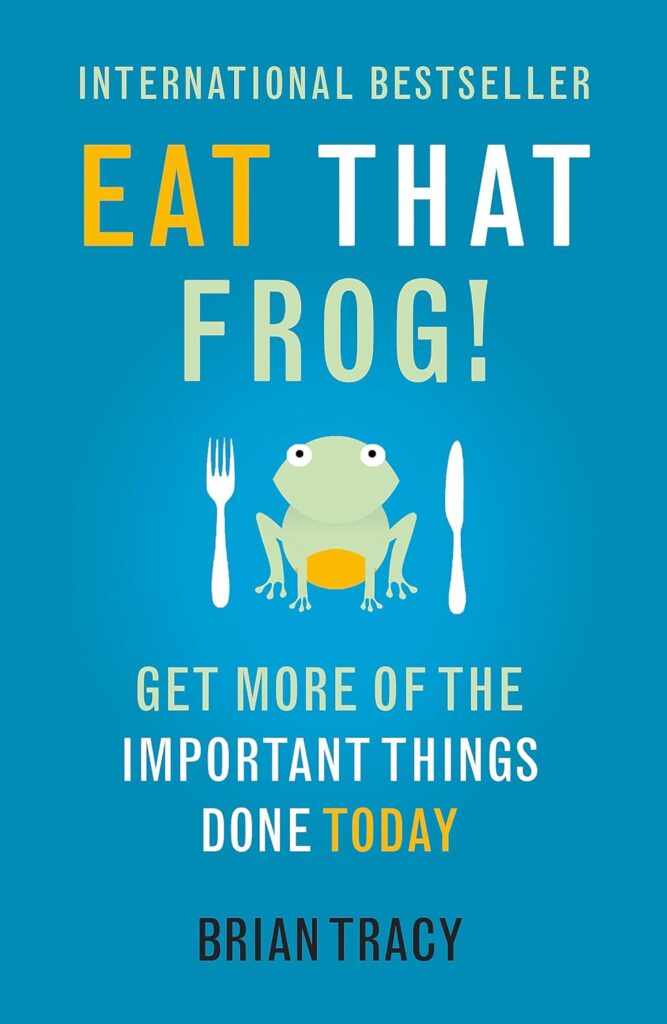
In Eat That Frog!, Brian Tracy presents a concise, practical guide to overcoming procrastination and focusing on what truly matters. The “frog” is the most important and often the least appealing task of the day. By tackling it first, you build momentum and reduce stress. Tracy emphasises clarity, goal-setting, and prioritisation, supported by the discipline to act on the most valuable tasks consistently.
The book blends psychological insight with actionable strategies: write down your goals, plan the steps, break them into smaller actions, and resist the lure of trivial tasks. Tracy’s approach champions personal responsibility, proactive planning, and an optimistic mindset.
Key Insights
Clarity of goals — Be specific about what you want to achieve; the clearer the goal, the easier it is to reach.
Think on paper — Write goals down, set deadlines, and list the required steps.
Plan before acting — Organise tasks by sequence and priority; time spent planning saves effort later.
Daily action — Do something every day that moves you towards your goal.
Focus — Apply yourself wholly to one task at a time; avoid distractions and trivial tasks.
Break it down — Divide large tasks into smaller, manageable steps and start immediately.
Self-management — Set your own deadlines and work without supervision.
Positive mindset — Look for the good, find the lesson, and focus on solutions.
Personal responsibility — Every action either builds or damages your reputation and self-esteem.
Eat the frog first — Start the day by completing your most important and unpleasant task.
Strengths
Clear, memorable central metaphor (“eat the frog”).
Practical, easy-to-apply techniques for tackling procrastination.
Combines goal-setting, planning, and action-taking in one coherent framework.
Encourages self-reliance and personal accountability.
Weaknesses
Heavy reliance on repetition to drive points home.
Some advice may feel overly simplistic for complex, multi-stakeholder projects.
Limited discussion on adapting the method to collaborative environments.
Reflections
Tracy’s metaphor works because it’s both vivid and actionable: doing the hard thing first transforms the rest of the day. His insistence on written goals and daily action is a reminder that productivity is built from disciplined habits, not occasional bursts of effort.
The principle action without thought equals trouble balances his bias towards doing. Careful planning combined with decisive execution is the real takeaway. His advice to resist clearing small tasks first is particularly valuable in an era of constant digital distraction.
Conclusion
Eat That Frog reduces time management into a powerful practice: focus on the most valuable task first, act decisively, and repeat daily. Its brevity and clarity make it an easy re-read, and its core principles apply to both personal and professional life. Success, Tracy argues, is less about time and more about choice, focus, and consistent action.
Book Details
Title: Eat That Frog!: The international bestseller – build habits, manage your time and get more of the important things done today!
Author: Brian Tracy
Publication Year: 2013
Genre: Time Management
Reference: Calandra Vol. 2, p. 56
← Previous: Beating Anger By Mike Fisher