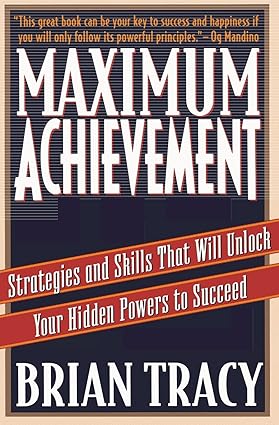
Maximum Achievement by Brian Tracy
Summary
Brian Tracy’s Maximum Achievement is both a mindset manual and a practical framework for success. It emphasises responsibility, self-control, positive relationships, and consistent daily action. Tracy blends goal-setting systems, personal discipline, and interpersonal skills into a cohesive philosophy designed to help readers unlock their potential in all areas of life.
Key Insights
Success Principles: No overnight success — progress comes from small, consistent steps. Define success clearly and set precise, realistic goals.
Mindset: Control thoughts; all outcomes originate from thinking. Avoid self-limiting beliefs (“too old/too late”). Expect high standards from yourself and others.
Goal-Setting Framework (12 Steps):
- Deep personal desire
- Realistic, achievable goal
- Write it down in detail
- List benefits
- Identify starting points
- Set deadlines
- Identify obstacles
- Determine resources needed
- Identify helpers
- Make a detailed plan
- Improve via feedback
- Visualise the result
Resilience: Never give in. “Try” usually means “won’t.” Choose responses to provocation; forgive self and others.
Stress Reduction: Act to dispel worry, have clear goals, and finish tasks. Anger damages health and signals weakness.
Interpersonal Skills:
- Raise your self-esteem by raising others’.
- Recognise people’s importance and make them feel valued.
- Avoid criticism, complaints, and fault-finding.
- Praise sincerely — promptly, specifically, and publicly when possible.
- Show interest, listen without interruption, and avoid dominating conversations.
- Avoid dogmatism; present opinions tentatively.
- Don’t burden others with personal problems.
Relationships: No public success compensates for failure at home. Rekindle love through small, kind acts.
Self-Responsibility: Self-pity is a choice and a barrier to happiness. Accept full responsibility for your life.
Strengths
Integrates mindset, goal-setting, and interpersonal relationship skills into a single, actionable framework.
Clear step-by-step goal-setting system.
Practical reminders about the emotional and relational aspects of success.
Weaknesses
Covers a wide scope, so some topics are less detailed than they could be.
Advice on interpersonal behaviour may feel prescriptive or old-fashioned to some readers.
Reflections
Tracy’s emphasis on self-responsibility and consistent action resonates strongly. The interpersonal guidelines, though traditional, remain effective for building respect and goodwill in personal and professional contexts.
There has been some pushback recently against “goal setting,” and with good reason. Every athlete at the start line shares the same goal: to win. But only one does. Goal setting alone isn’t enough. That is the limit of Tracy’s approach. I can repeat, “I am a brilliant rugby player” as often as I like, but unless I put in the training, it will achieve nothing, except perhaps to make me look foolish.
Conclusion
A comprehensive guide to personal success, combining internal discipline with external relationship-building. The practical steps for goal achievement, coupled with a strong moral compass, make this a lasting resource for anyone committed to self-improvement.
This is the usual Brian Tracy fare, and that’s not a criticism.
Book Details
Title: Maximum Achievement: Strategies and Skills that Will Unlock Your Hidden Powers to Succeed
Author: Brian Tracy
Publication Year: 1995
Genre: Motivation
Reference: Calandra Lark Vol. 2, p 68
← Previous: One to One by Ian Seymour
Next → Goals by Brian Tracy