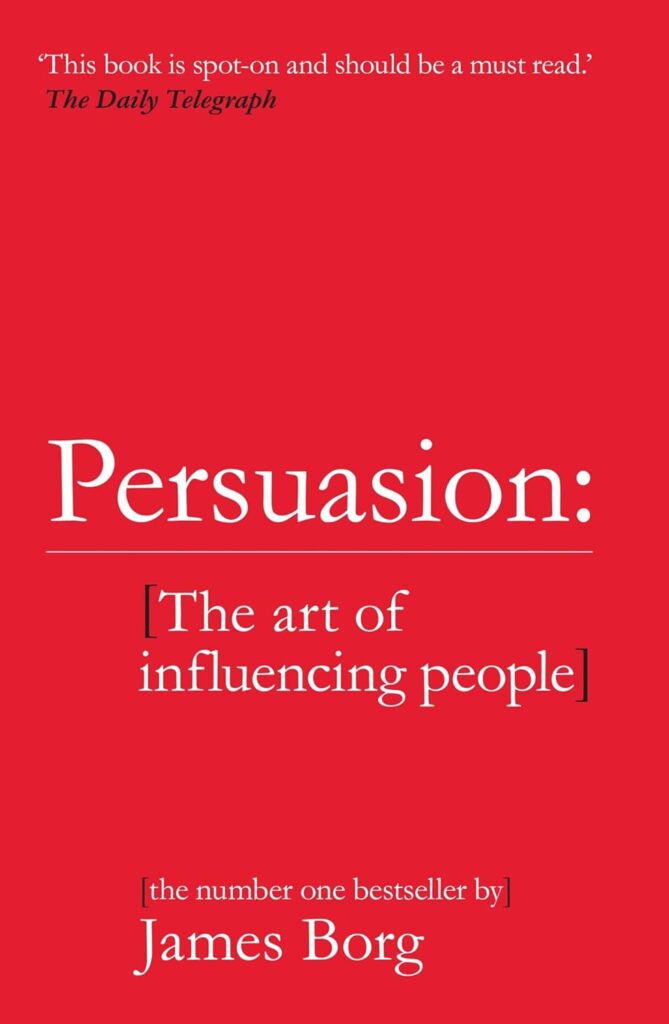
Persuasion: the Art of Influencing People by James Borg
Summary
James Borg’s Persuasion is a practical guide to influencing others through ethical, emotional, and logical means. He emphasises that persuasion is as much about listening and understanding as it is about speaking, and that most decisions are driven by emotions rather than pure logic. The book covers key listening skills, memory techniques, and conversational habits that build trust and rapport.
Key Insights
Three Types of Persuasion: Ethical (integrity-based), emotional (feelings-driven), and logical (fact-based).
Listening Skills: Avoid interrupting, finishing others’ sentences, talking over people, or offering advice too soon.
Emotional Weight of Decisions: Most choices are emotional at their core.
Memory & Interest: Remembering details shows genuine interest; forgetting signals disinterest.
Name Recall: On meeting someone, ask them to repeat their name and say it back to them to help memory.
Trustworthiness: Don’t make empty promises — they damage relationships.
Respect for Others’ Priorities: What’s trivial to you may matter greatly to someone else.
Language Discipline: Avoid definitive or exaggerated statements (“he’s the worst boss ever”) and don’t present opinions as facts.
Avoid Forcing Language: Refrain from “you must” or “you should” phrasing, which can provoke resistance.
Strengths
Clear, actionable advice on improving rapport and influence.
Balances practical conversation tips with a deeper understanding of emotional drivers.
Strong focus on ethical persuasion over manipulation.
Weaknesses
Limited exploration of complex persuasion psychology; mostly focused on interpersonal conversation.
Some advice may feel like common sense to experienced communicators.
Reflections
Borg’s framework is most useful for everyday persuasion, such as job interviews and networking. The reminders on listening, memory, and language choice reinforce that influence is built through respect and attention rather than dominance.
This theme, of treating people with respect, keeps cropping up.
Conclusion
A straightforward, ethical guide to becoming more persuasive by listening well, showing interest, and respecting others’ perspectives. Its simple but effective techniques make it a useful refresher for anyone wanting to improve personal influence.
Book Details
Title: Persuasion: The art of influencing people
Author: James Borg
Publication Year: 2019
Genre: Communications
Reference: Skylark Vol. 3, p. 26
← Previous: What’s Stopping Me by Robert Kelsey
Next → One to One by Ian Seymour