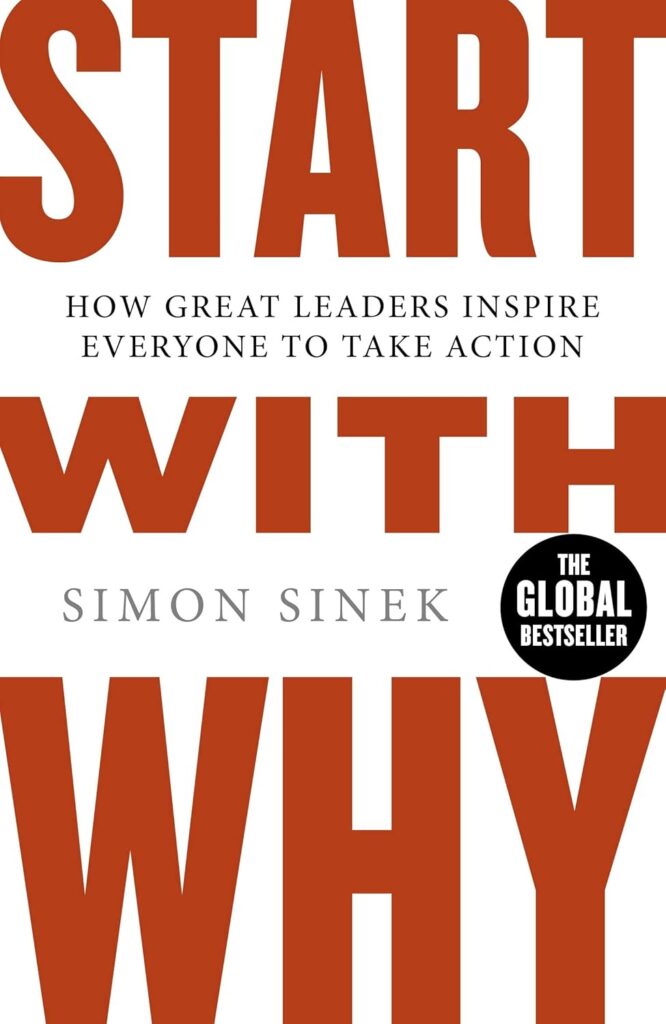
Start With Why by Simon Sinek
Summary
Simon Sinek explores the fundamental difference between companies and leaders that inspire and those that transact. At the heart of his message is the Golden Circle: knowing what you do is easy, knowing how you do it is harder, but understanding and communicating why you do it, your purpose, cause, or belief, is what drives lasting success.
People don’t buy what you do; they buy why you do it. Organisations that lose sight of their “why” stagnate and are overtaken, as with 19th-century U.S. railway companies that saw themselves in the business of building railways rather than providing mass transportation. Great leaders hire for belief alignment, treat employees well so they, in turn, treat customers well, and build cultures of trust and authenticity.
Key Insights
We can either manipulate or inspire; the latter creates lasting loyalty.
Fear-based tactics make facts incidental; belief-based leadership inspires.
The Golden Circle: What → How → Why, with Why at the core.
Authenticity occurs when actions are consistent with beliefs.
Hire for shared beliefs and attitude, not just skills.
Treat employees as you want them to treat customers; the chain extends to shareholders.
Great leaders serve and create environments where ideas flourish.
Office politics signals self-interest over shared purpose.
Compete against yourself, always seeking improvement.
My personal “why” is to establish mutually beneficial trading relationships.
Strengths
Powerful central concept (the Golden Circle) that is easy to understand and apply.
Inspiring examples from history and business.
Clear distinction between superficial perks and genuine culture.
Weaknesses
Some repetition of core ideas.
Relies heavily on anecdotal examples; less data-driven than some readers might prefer.
Reflections
ISinek insists that recruiting for character outweighs recruiting for skill. I agree. His point is that treating employees well naturally results in them treating customers well. Again, I agree. (Who would have believed it!) The railway example serves as a reminder to keep focus on the underlying mission, rather than becoming fixated on the tools or processes. My own “why”, to establish mutually beneficial trading relationships, aligns neatly with Sinek’s philosophy.
Conclusion
Start with Why is a persuasive reminder that the most enduring organisations and leaders are anchored by a clear purpose. By defining and living their “why,” they inspire loyalty, foster trust, and build cultures that endure beyond individual products or leaders. Sinek’s message is simple but profound: clarity of purpose is the foundation of sustained success.
Book Details
Title: Start With Why: How Great Leaders Inspire Everyone to Take Action
Author: Simon Sinek
Publication Year: 2011
Genre: Business
Reference: Skylark Vol. 5 p. 18
← Previous: The Ten Faces Of Innovation By Tom Kelly