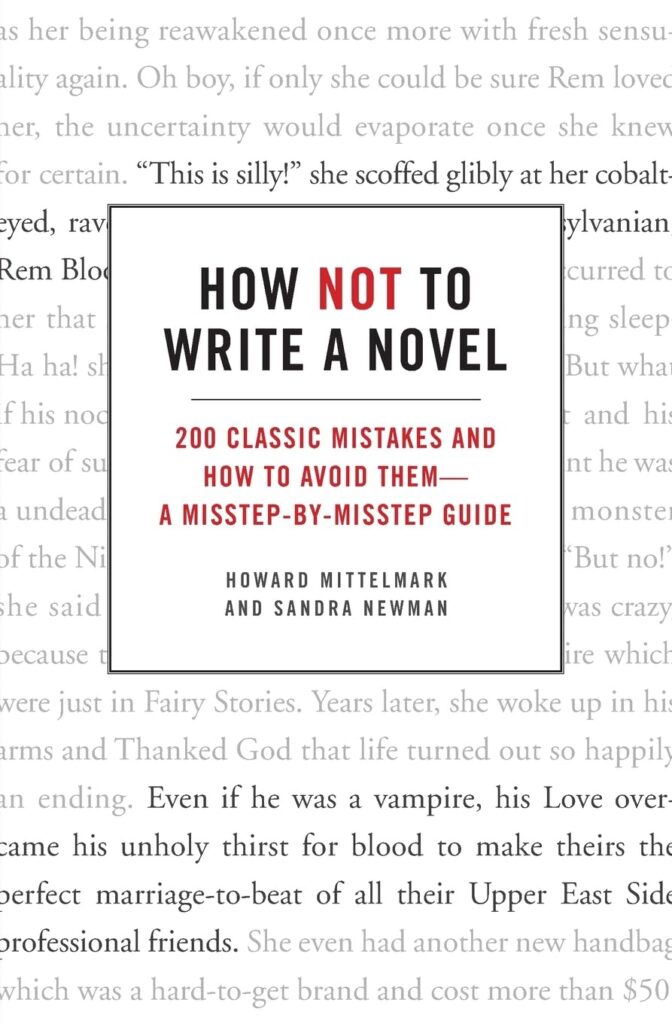
How Not to Write a Novel by Howard Mittelmark and Sandra Newman
Summary
How Not to Write a Novel by Howard Mittelmark and Sandra Newman is an irreverent guide to the pitfalls that blight manuscripts before they reach an editor’s desk. Rather than laying out rules of good writing, the authors catalogue the errors aspiring novelists most often commit, for example, rambling openings, irrelevant detail, cardboard villains, mirror clichés, and deus ex machina rescues. The book is written with comic exaggeration, but its lessons are serious: respect the reader, avoid self-indulgence, and above all, keep the story moving.
Key Insights
Premise must matter: The central dilemma must be important; trivial stakes make for trivial stories.
Common faults: “Waiting room” beginnings, “holiday slideshow” settings, “long runways” of backstory.
Nothing irrelevant: Cut journeys, daily routines, brand lists, or ornamental description.
Conflict matters: Every plan must go wrong; problems must escalate credibly.
Seed the skills: If a character later escapes by climbing, show earlier they can climb.
Show, don’t tell: Avoid “value” words like amazing; show what makes something so.
Dialogue: Keep tags simple (said, asked), avoid adverb-stuffed attributions.
Accountability: Characters need realistic finances, motivations, and consequences.
Villains and stereotypes: Give antagonists motivation; avoid clichés like “cruel stepparents” or “gay hairdressers.”
Professionalism: R wants to be entertained, not lectured; don’t draw attention to the author.
Strengths
Humorous and memorable: The satirical tone makes the lessons stick.
Wide-ranging: Covers faults of plot, characterisation, style, and structure.
Reader-centred: Constantly asks: will this engage or irritate the reader?
Practical: Many examples of “bad writing” make the advice vivid.
Weaknesses
Negativity bias: The focus on mistakes can feel relentless; it doesn’t offer as much constructive “how-to.”
Comic exaggeration: The humour may undercut the seriousness for some readers.
Overlap with other craft books: Much advice echoes standard writing guides, though delivered in parody form.
Reflections
Reading How Not to Write a Novel is a bit like being teased by two witty friends who know the publishing world inside out. Stein was confident; Mittelmark and Newman are merciless. They exaggerate, but behind the satire lies sound advice: avoid self-indulgence, respect your reader, and eliminate waste. Their examples reminded me of bad novels I’ve actually read. Once you see how obvious a cliché is, whether it’s the mirror description or the villain’s monologue, it’s hard to unsee.
Conclusion
Mittelmark and Newman succeed in making the cardinal sins of fiction unforgettable. Their argument is simple: if you want to be published, be professional, be concise, and never bore the reader. By parodying the worst habits of amateur novelists, they shine a light on what not to do, making this a cautionary tale. For writers willing to laugh at themselves while learning, it’s a lively companion.
Book Details
Title: How Not to Write a Novel: 200 Classic Mistakes and How to Avoid Them–A Misstep-By-Misstep Guide
Author: Howard Mittelmark and Sandy Newman
Publication Year: 2013
Genre: Creative writing
Reference: