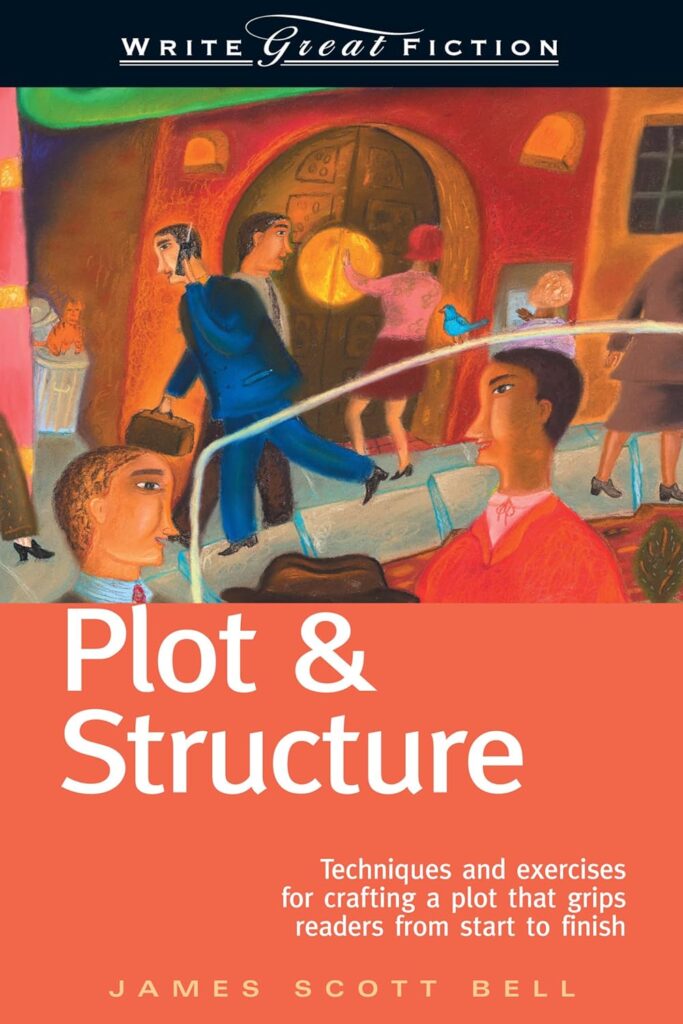
Plot and Structure by James Scott Bell
Summary
James Scott Bell’s Plot and Structure is a guide for writers seeking to forge compelling stories. Bell focuses on craft, discipline, and clarity. Writers, he insists, must show up every day, set quotas, and treat writing like a profession rather than a hobby. His central concern is always the reader: why should the reader care, and why should they keep reading? For Bell, plot is not just a string of events but the crucible in which the character is tested and ultimately changed.
Key Insights
Writing discipline: write first, edit later. First drafts are rubbish, but they are essential rubbish. Daily quotas matter more than waiting for inspiration.
Compelling characters: C must be strong, memorable, flawed, and in pursuit of a worthy goal. No wimps.
Conflict and opposition: every goal requires obstacles, whether physical, psychological, or relational. A must have equally compelling reasons for opposing the character.
The Story Question: What does our hero want? The entire narrative should revolve around this central question.
Inciting incidents and doorways: the story starts with a disruption; the “doorway” is the point of no return, locking the hero into the struggle.
Suspense and stakes: keep the reader on edge by escalating the dangers. This could be the loss of a job, family, or life. Always delay gratification to raise tension.
Premise and character arc: Reduce the premise into a single sentence. Show how the hero changes in terms of beliefs, values, and attitudes through conflict and challenge.
Dialogue principles: dialogue must have tension and purpose. Speech is action: each character should have an agenda, with clashing agendas driving the scene. Exposition should be hidden in confrontation, never dumped.
Idea generation: use “what if?” scenarios, random occupations, sounds, outrages, or even endings to spark ideas. Quantity breeds quality.
Practical techniques: spreadsheets to track progress, scene maps with alternative endings, and constant focus on whether the reader cares about the hero and the story.
Strengths
Bell is immensely practical. He avoids jargon and writes with clarity, providing many examples. His emphasis on discipline is refreshing: writing is hard work, not the product of overnight genius. Amen! He explores the mechanics of plot, but always in relation to the character and their emotions, reminding writers that the hero must be worth caring about. His advice on suspense and the “doorways” of no return is especially useful for keeping a narrative moving.
Weaknesses
Bell’s approach leans heavily toward commercial fiction. Experimental or literary writers may object to his insistence on structure, suspense, and clarity. At times, his examples verge on cliché (guns, car crashes, ticking clocks), although he uses them to illustrate principles rather than prescribe solutions. Readers seeking in-depth literary theory may find the book too pragmatic.
Reflections
Bell’s book strikes me as a manual for professionals rather than a guide for dreamers. His call to set daily quotas and “turn up every day” leaves no room for waiting on the muse. I find his distinction between ‘want ‘ and ‘need ‘ especially powerful: what the character wants drives the plot, but what the character needs provides the transformation. His dialogue section echoes Sol Stein and William Storr: conflict, agenda, and tension are the lifeblood of a scene.
The reminder that “good writing is effective writing” is deceptively simple. It doesn’t have to be pretty; it has to work. As with dating or first impressions, readers rarely give a second chance. Bell’s demands is that every word earn its place on the page.
Conclusion
Plot and Structure is a practical and disciplined guide to building compelling stories. Bell argues that writing is not magic. It is hard work. It is daily quotas, editing, and constant focus on character, conflict, and suspense. If the advice sometimes leans toward the commercial, it is only because Bell never forgets that stories are written to be read. For any writer seeking to establish a foundation in storytelling, this book offers a clear framework.
Book Details
Title: Plot and Structure: Techniques and Exercises for Crafting a Plot that Grips Readers from Start to Finish
Author: James Scott Bell
Publication Year: 2004
Genre: Creative writing
Reference:
← Previous: How to Grow a Novel by Sol Stein