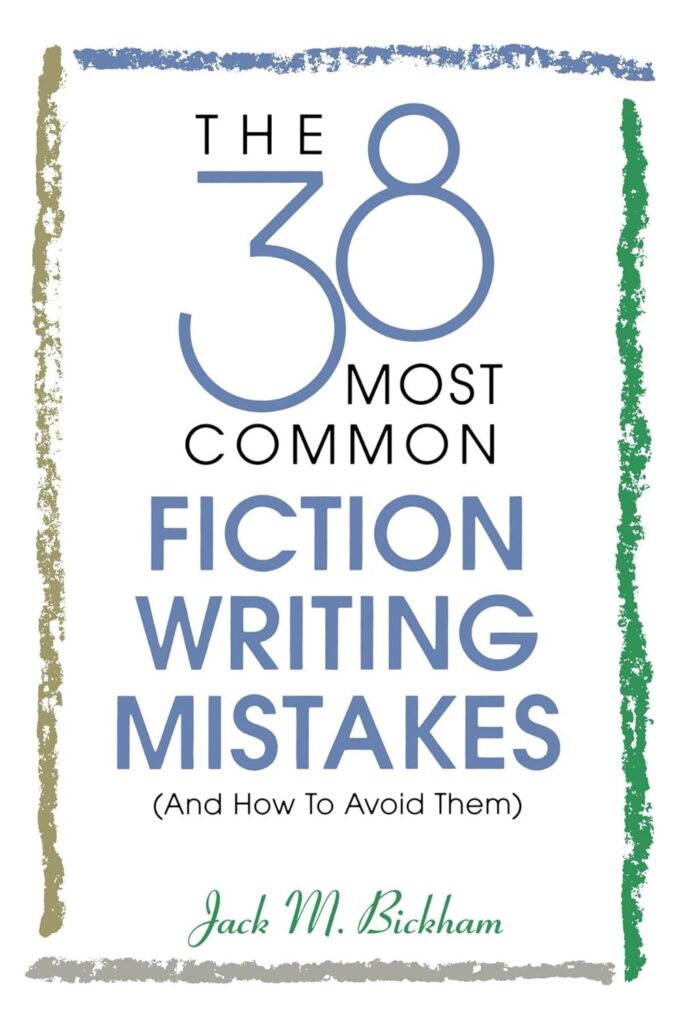
The 38 Most Common Fiction Writing Mistakes by Jack M. Bickham
Summary
Jack M. Bickham’s book is a practical, no-nonsense guide to avoiding the pitfalls that derail aspiring novelists. Rather than offering abstract theory, Bickham lays out common traps—from overwrought description to undisciplined drafting—and provides clear strategies to keep a story focused, engaging, and readable. His central message is that fiction is about disciplined storytelling, not self-indulgence.
Key Insights
Professionalism: Writing is a discipline. Treat it like one—write every day, plan before you draft, and never stop.
Respect for the Reader: Don’t condescend, lecture, or use obscure language. Fiction is entertainment, not a soapbox.
Start with Conflict: Begin with threat and change; fiction is always a response to conflict.
Description in Motion: Description must support action, never stall it. Feed it in naturally around events.
Characters: Real people are dull; characters must be exaggerated, purposeful, and in conflict. Never write about “wimps”—your C needs goals and must act to pursue them.
Viewpoint Discipline: Stick to the POV of the character with the most at stake, and remind the R through framing (“Bob felt…”).
Cause and Effect: Every beat should flow logically, like a tennis rally—no coincidences, no wasted moves.
Dialogue: Keep conversations terse, purposeful, and conflict-driven. Let C avoid being a windbag. “Said” is fine—don’t fear repetition. Prefer “Joe said” to “said Joe.”
Language: Good prose is brief, direct, simple, concrete. Strong verbs and precise nouns beat adjectives and adverbs.
Scenes with Questions: Each scene should pose a question with an answer that complicates (“Yes, but…”).
Planning: Know your story before you begin. Define your story statement (≤150 words), C’s goal, the antagonist’s identity and goal. Avoid sprawling casts.
Process: Don’t expect perfection on the first draft—follow “plan, write, fix.”
Strengths
Unflinchingly practical—Bickham strips away pretension and urges writers to get to the point.
Emphasis on conflict and threat makes stories compelling from the first line.
His rules on clarity, brevity, and strong word choice are timeless.
The “scene question” and “Yes, but…” structure is a powerful tool for sustaining narrative tension.
Encourages discipline and professionalism—writing is treated as craft, not inspiration.
Weaknesses
The tone can feel overly prescriptive; some writers may find his rules rigid.
Exaggerated characters and stripped-down prose might not suit more literary or experimental styles.
His dismissal of description may feel limiting for readers who enjoy atmosphere and setting.
Reflections
For me, the strongest takeaway is Bickham’s insistence that fiction equals conflict. Threat and tension must underpin every scene, and the Protagonist must never be passive. His focus is on respecting the Reader by avoiding lectures, windbaggery, or showy prose. This reinforces the idea that writing is a form of communication, not a performance. I especially value his “Yes, but…” framework for scenes, as it keeps momentum alive while deepening stakes.
At the same time, I recognise that I lean toward more descriptive writing than Bickham would allow. The challenge is integrating his advice on conciseness and conflict without losing the texture and richness that I also admire in fiction.
All that said, I have a special soft spot for Bickham, since his was the first creative writing book I ever read. It felt a bit like a first kiss, very awkward in my case, and completely unforgettable.
Bickman’s Story Statement Template
Protagonist (C):
Name, age, role, and one defining trait.
Goal:
What does C want above all else? This should be clear, concrete, and urgent.
Antagonist:
Name, role, and their opposing goal. What drives them?
Conflict:
How does the antagonist’s goal directly threaten C’s? What is at stake if C fails?
Setting:
Where and when does the story unfold? What context shapes the conflict?
Story Statement (≤150 words):
In [setting], [Protagonist] struggles to [state central goal], but standing in the way is [Antagonist], who seeks [antagonist’s goal]. Every attempt to succeed raises the stakes, forcing [Protagonist] into escalating conflict. As danger mounts, the question becomes not only whether [Protagonist] will achieve the goal, but at what cost—and whether the journey will transform [Protagonist] in unexpected ways.
Conclusion
The 38 Most Common Fiction Writing Mistakes is not a book of inspiration but of correction. It shows, with blunt practicality, how easy it is to derail a novel and how to stay on track. For any writer serious about craft, Bickham offers a professional, disciplined framework: plan before you write, put C in conflict, respect the R, and never stop writing.
Book Details
Title: The 38 Most Common Fiction Writing Mistakes
Author: Jack M. Bickham
Publication Year: 2001
Genre: Creative writing
Reference: