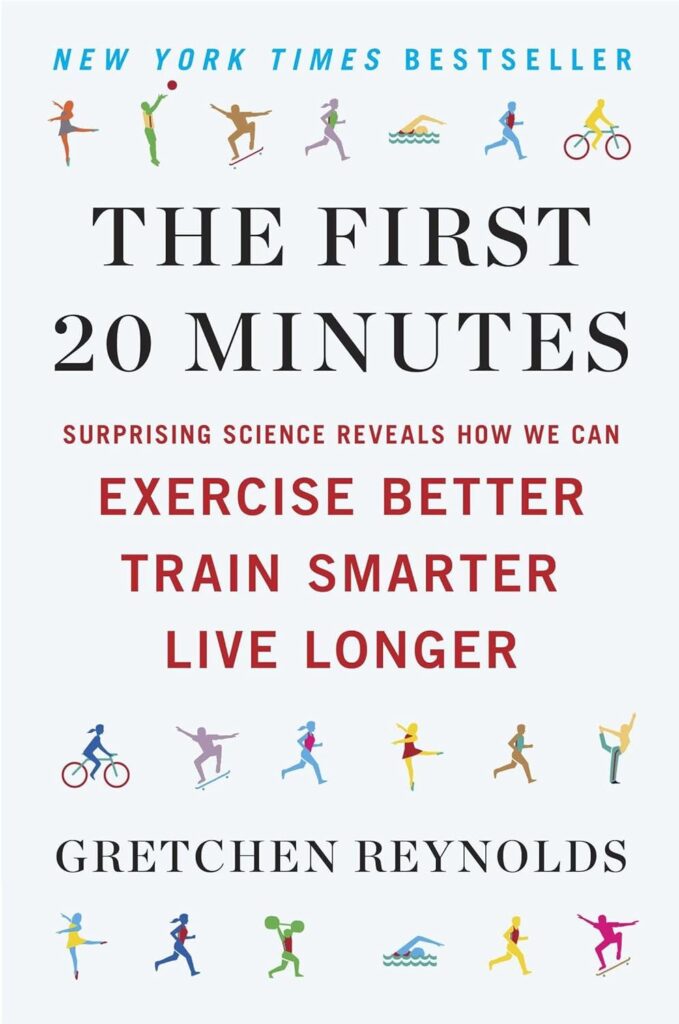
The First 20 Minutes by Gretchen Reynolds
Summary
Gretchen Reynolds, health and fitness writer for The New York Times, explores the science of exercise in The First Twenty Minutes. Her central claim is that we do not need to live in the gym to enjoy profound health benefits: the most important changes occur in the first twenty minutes of movement. Reynolds provides evidence-based answers to questions about training, recovery, and ageing. The result is a practical guide to exercising smarter, not just harder.
Key Insights
Training principles
- Progress steadily: increase distance and speed by no more than 10% at a time.
- Interval training is more effective than long-distance training; even four minutes of vigorous effort can rival hours of moderate exercise.
- HIIT protocols (short bursts of intensity, repeated with recovery) deliver disproportionate benefits.
- Stretching before running does not prevent injury; a brisk walk or light jog is the best warm-up.
- Muscles grow by micro-damage and repair; rest days are essential to recovery.
Hydration and nutrition
- The “eight glasses a day” rule is a myth; listen to thirst cues.
- Overhydration (water intoxication) dilutes sodium, causing organ swelling and sometimes death.
- Exercise alone rarely produces weight loss: the body compensates by increasing hunger and conserving energy.
- The real key is calorie deficit, sustained with intensity and discipline.
Fitness and health
- Aerobic fitness is the strongest predictor of longevity, outranking smoking and obesity.
- Men over 50 unable to run a mile in ten minutes face a 30% higher heart attack risk than fitter peers.
- Waist size is a critical marker: over 40 inches for men, 35 for women, correlates with visceral fat and increased risk.
- Strength training is as important as endurance, especially for older adults; it preserves muscle, prevents diabetes, and supports independence.
The brain and exercise
- Movement and brain health are deeply linked; sedentary animals (like sea squirts) atrophy their brains when they stop moving.
- Exercise stimulates proteins such as “noggin” that support brain growth and resilience.
- Fit people handle stress and anger better; aerobic exercise improves mood and reduces anxiety.
- Exercise appears to slow ageing at the cellular level by protecting telomeres.
Cultural and historical notes
- Dr. Morris’s classic 1949 study showed London bus conductors, who climbed stairs, were far healthier than sedentary drivers.
- Even standing more often helps: inactivity is itself a modern disease.
- Music boosts endurance; up-tempo tracks improve running pace.
Strengths
Reynolds translates dense scientific studies into clear, practical advice.
The book punctures myths (stretching, water intake, massage recovery) with evidence.
Covers a wide scope: from injury prevention to brain health and ageing.
Offers actionable guidelines for readers at any fitness level.
Weaknesses
The breadth can feel scattered, as if hopping from study to study.
Some findings are provisional; the science of exercise evolves quickly, and not all claims may stand the test of time.
Practical recommendations sometimes remain vague (“exercise more intensely”) without detailed roadmaps for beginners.
Reflections
Reynolds’ message is simple: exercise is not a silver bullet for weight loss, but it is the most effective medicine we have for maintaining health, promoting longevity, and enhancing mental resilience. The focus on the first twenty minutes makes fitness feel attainable: walking daily, standing more often, or doing a handful of high-intensity intervals can yield life-changing benefits. Perhaps the most striking insight is how deeply the body and mind are built for movement: from hunter-gatherer DNA to brain proteins, we are designed to thrive when active.
Conclusion
The First Twenty Minutes is a lively, science-grounded guide to exercise in the modern age. Even modest amounts of movement can improve health. It is inactivity that is deadly, but action, even in small, regular doses, can keep us young and resilient. At heart, the book is a manifesto for asserting our evolutionary heritage: for longer, healthier lives.
Book Details
Title: The First 20 Minutes: Surprising Science Reveals How We Can Exercise Better, Train Smarter, Live Longer
Author: Gretchen Reynolds
Publication Year: 2013
Genre: Teaching Aid
Reference: Calandra 6.16
← Previous: Make Your Bed by William McRaven