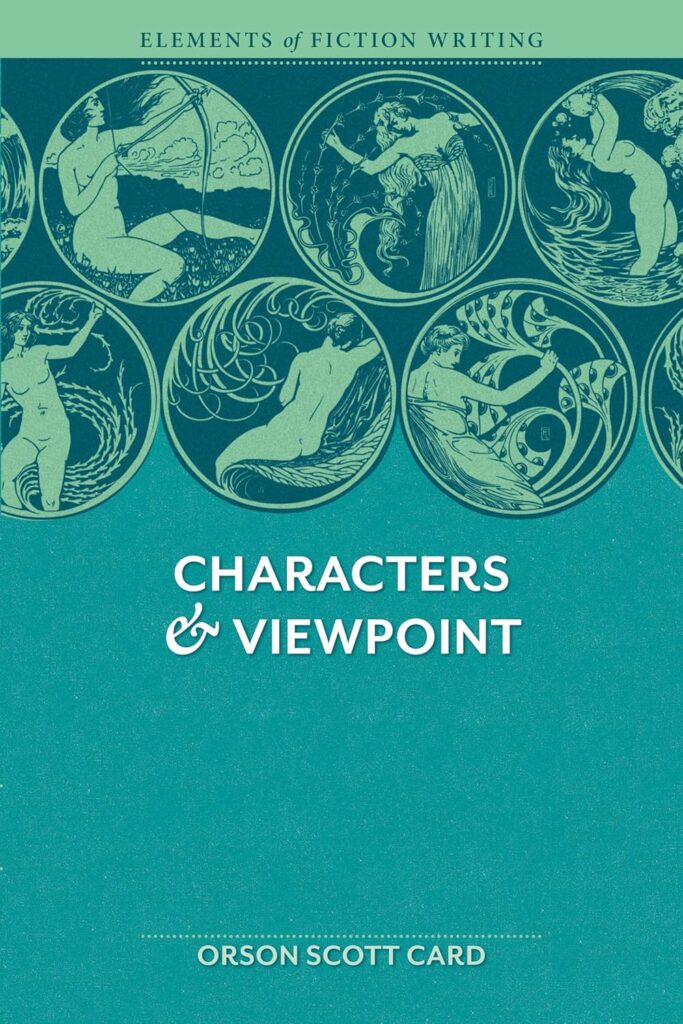
Characters & Viewpoint by Orson Scott Card
Summary
Orson Scott Card’s Characters and Viewpoints is a practical, thoughtful guide to building characters that readers care about. He insists that plot and setting only matter if the reader believes in the people moving through them. Characters must not only be plausible but compelling, with clear motives, consistent traits, and goals that matter.
Key Insights
Skill and favour: “Kunst mach Gunst” — skill wins favour. Characters should have some distinctive ability that develops as the story progresses.
Reader’s three questions: So what? (Why should I care?), Oh yes (Is this plausible?), What’s happening? (Am I following?).
Names: Keep names distinct, memorable, and consistent.
The MICE quotient: Four elements that shape any story:
- Milieu – the environment characters inhabit.
- Idea – the central question or puzzle.
- Character – who they are.
- Events – what happens.
Making readers care: Courage, responsibility, sacrifice (when justified), and fairness are attractive. Whining, boasting, or shirking responsibility are fatal flaws.
Heroes and villains: Heroes may appear ordinary (e.g., Smiley, Rumpole) but reveal hidden strength. Villains must see themselves as justified.
Believability: Every choice should be motivated; if characters change, the change must be earned.
Practical techniques:
- Ask “what can go wrong?” at each stage.
- Use the “six whys” to dig into character decisions.
- Prefer memory in dialogue to lengthy flashbacks.
- Show skills early, then build on them gradually.
Language: Avoid long words, clichés, and insincerity. The enemy of clear prose is pretence.
Orson Scott Card’s Six Whys Template
Decision/Action:
(What does the character do? e.g., Hal hires Angus after meeting him in the pub)
- Why does C do this?
- (Immediate, surface reason.)
- Why that reason?
- (What underlying need, circumstance, or pressure drives the first answer?)
- Why does that matter to C?
- (Personal stakes or values revealed.)
- Why now?
- (Why this moment in the story — what forces the action?)
- Why not something else?
- (What other options exist, and why are they rejected?)
- Why is this true to C’s character?
- (How does it align with past experience, personality, or misbeliefs?)
Strengths
Excellent balance between theory and craft; Card explains why readers care about characters and how to make them care.
His insistence on relevance — every trait, every detail must connect to the story — keeps the writer honest.
The “MICE” model is a memorable framework for thinking about story balance.
Weaknesses
Some advice feels dated (e.g., attitudes about gender roles).
Card’s emphasis on “awe” as necessary for audience engagement may feel overstated; many powerful stories thrive on subtlety rather than spectacle.
Reflections
What I took most from Card is the idea that characters are the crucible of story. Readers don’t care about events in isolation; they care about how events change people they believe in. His reminder to always ask the “six whys” struck me: when Hal hires Angus, is it out of need, pity, loneliness, or kinship? The answer defines both men.
I also like Card’s distinction between qualities readers admire (courage, fairness, responsibility) and those they detest (boasting, whining, shirking). These simple yardsticks help me test whether my protagonist will win sympathy. And his treatment of villains, that they must see themselves as justified, is invaluable.
Above all, Card’s advice that “if there is no awe, there is no audience” pushes me to ask: why should the reader be interested in this character? The answer can’t be in surface detail but in relevance, motive, and meaning.
Conclusion
Card’s Characters and Viewpoints is a reminder that a story lives or dies with character. Plot, setting, and ideas matter, but unless the reader cares about the character, unless we believe their motives, understand their struggles, and anticipate their choices, the story will fall flat. What stays with me is Card’s insistence on constant questioning: Why does Character act? Why this way? Why now? His “six whys” technique strips away convenience and forces the writer to uncover the deeper truths that drive human behaviour.
For me, the value of the book is its pragmatism. Card does not mystify characterisation; he shows that with skill, observation, and honesty, we can build characters who feel alive. Ultimately, if the reader believes, cares for, and understands the character, then the writer has succeeded.
Book Details
Title: Characters & Viewpoint
Author: Orson Scott Card
Publication Year: 2011
Genre: Creative writing
Reference:
← Previous: Story Genius by Lisa Cron
Next → Into the Woods by John Yorke