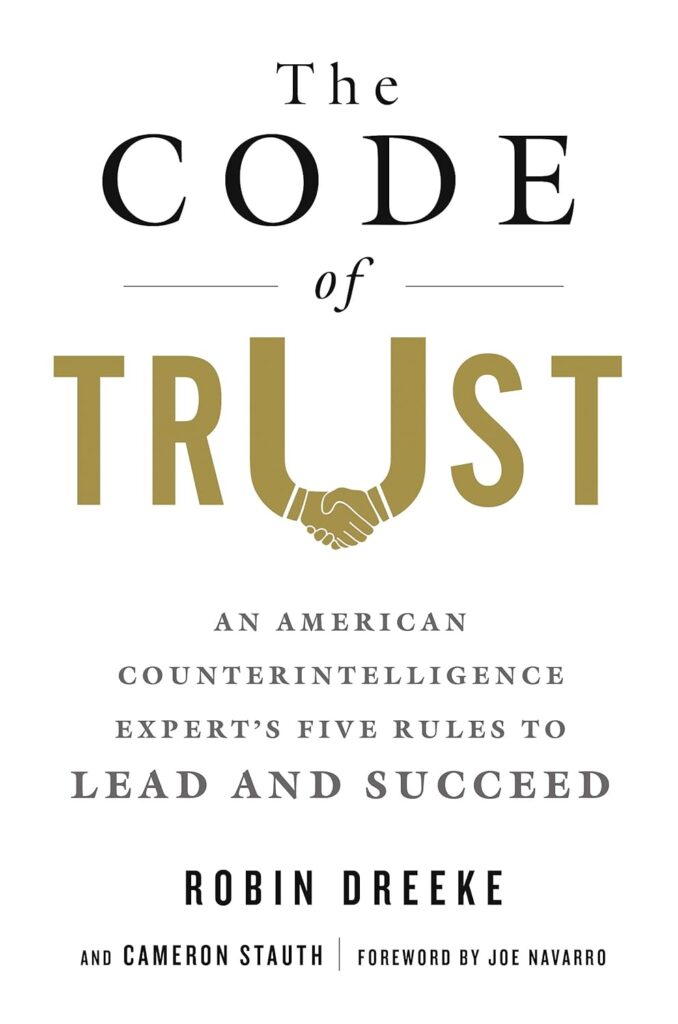
Code of Trust by Robin Dreeke
Summary
Robin Dreeke, a former FBI agent and specialist in counterintelligence, lays out a practical framework for building trust in The Code of Trust. His message is simple yet profound: trust is not demanded; it is consistently earned. To gain the trust of others, one must first become trustworthy, then consistently demonstrate respect, humility, and a commitment to serving others. Through principles, processes, and daily practices, Dreeke explains how trust can transform relationships, leadership, and influence.
Key Insights
Becoming Worthy of Trust
- Trust begins with asking: Am I worthy of trust?
- To inspire trust, consistently put others first. This means focusing less on personal success and more on helping others succeed.
- In business, for example, the goal should not simply be making the company thrive, but bringing out the best in employees.
Respect and Humility
- Respect is the foundation of trust. It does not mean friendship, but it does mean acknowledging others’ time, dignity, and goals.
- Start meetings by promising to be brief—this shows respect for the other person’s time.
- Humility (“suspending the ego”) is the path to trust. Nobody trusts someone who talks down to them or tries to impress.
- Avoid flattery; it feels false. Instead, validate others sincerely by listening and recognising their worth.
The Five Rules of Trust
- Suspend Ego – Humility is essential.
- Be Non-Judgmental – Respect differing opinions.
- Demonstrate Respect – Courtesy builds bridges.
- Honour Reason – Stick to facts, avoid exaggeration or fear tactics.
- Be Generous – Trust is mutual; give as well as receive.
The Four Steps to Inspire Trust
- Align Goals – Identify your ultimate goal, then find ways to align it with others’ goals.
- Context – Understand the other person’s background, beliefs, and perspective.
- Craft the Encounter – Plan meetings carefully; be brief, respectful, and purposeful.
- Speak with Respect – Avoid judgment, selfishness, or exaggeration; listen more than you talk.
Communication and Listening
- Listening is the heart of trust. Dreeke’s “12 Commandments of Active Listening” stress: keep opinions to yourself, don’t interrupt, encourage reflection, paraphrase for clarity, and avoid absolute words like always or never.
- Speak slowly—it conveys thoughtfulness and credibility.
- Use the magic words: please, sorry, and thank you.
- Never waste someone’s time: prepare thoroughly, arrive early, and establish clear time limits.
Practical Wisdom
- Trust is contagious—so is distrust.
- Exaggeration is a form of lying and breeds suspicion.
- Validate others without judgement; never complain, vent, or whine.
- Leaders earn loyalty by listening, setting clear expectations, giving recognition, and empowering people.
- When goals conflict, it is often wiser to walk away politely than force a win.
- Courage means admitting when you are wrong.
- Peacemakers, not warriors, are the true heroes in real life.
Strengths
Actionable principles: Dreeke translates abstract values into concrete behaviours—how to enter a meeting, how to listen, even how to manage time respectfully.
Universal application: These rules apply in leadership, business, personal relationships, and conflict resolution.
Deep humanity: At its core, the book recognises that we all want to be accepted, validated, and treated fairly.
Weaknesses
The book can feel repetitive, with variations on “put others first” appearing throughout.
Some sections verge on prescriptive, offering checklists that might overwhelm readers seeking a simpler message.
Reflections
This book reframes trust as a discipline rather than an emotion. It reminded me that influence is not about charisma or force, but about consistently valuing others above myself. The emphasis on preparation, including arriving early and respecting others’ time, is practical. The distinction between validation and flattery is a useful one.
Sincerity builds trust, while flattery destroys it. This reminds me of General Eisenhower, who, on being asked how he showed people that he was sincere, replied, “By being sincere.”
Most importantly, Dreeke’s challenge is: How do I help people feel better about themselves? The answer to that question shapes whether others will trust me.
Conclusion
The Code of Trust is a compelling guide for anyone who wants to lead, persuade, or simply build better relationships. Dreeke makes it clear that trust is not a strategy to manipulate others but a way of life grounded in humility, respect, and generosity. By consistently putting others first, aligning goals, and listening well, leaders and individuals alike can unlock the true power of trust.
Book Details
Title: Code of Trust, The: An American Counterintelligence Expert’s Five Rules to Lead and Succeed
Author: Robin Dreeke
Publication Year: 2018
Genre: Assertiveness
Reference: Calandra 6
← Previous: The Motivation Myth by Jeff Haden