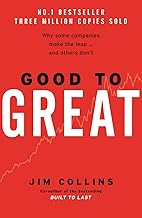
Good to Great by Jim Collins
Summary
In Good to Great, Jim Collins examines why some companies transform themselves from average to excellent, and why most do not. Collins argues that greatness stems from disciplined people, thought, and action, rather than from dramatic breakthroughs or visionary slogans. Success is built on recruiting the right people, fostering a culture of self-discipline, and focusing on what an organisation can do better than anyone else.
Key Insights
Don’t settle for “good enough” – Excellence is a choice, not a by-product.
The right people are the most important asset – Recruit for character, work ethic, and basic intelligence before skills.
Be rigorous, not ruthless – Apply high standards consistently at every level; remove poor performers quickly but fairly.
A culture of discipline beats bureaucracy – When people are self-disciplined, you don’t need heavy hierarchy.
Leadership is humble yet fearless – Great leaders serve others, shun perks, and combine modesty with determination.
Technology is a tool, not a driver – Use it to accelerate momentum, not to create it.
Face the brutal facts – Don’t ignore bad news; conversations must be genuine, not a management performance.
Focus on the “Hedgehog Concept” – Concentrate on what you can be the best at, what you are passionate about, and what drives your economic engine.
Stop-doing lists are as important as to-do lists – Prune activities that don’t contribute to excellence.
Lead by example – Tenacity and consistent behaviour speak louder than words or mission statements.
Strengths
Research-based – Collins backs his conclusions with extensive case studies and comparisons.
Actionable principles – The ideas translate into concrete hiring practices, cultural norms, and leadership behaviours.
Timelessness – The emphasis on discipline, character, and focus feels relevant beyond corporate contexts.
Weaknesses
Corporate bias – Examples come mainly from large American companies, limiting immediate relevance for small organisations or startups.
Hindsight framing – Some “great” companies later declined, raising questions about the durability of the findings.
Reflections
Collins makes an interesting point about Nucor Steel, where half of each employee’s pay comes from a team bonus. This system means that teams themselves weed out inefficient workers. His summary was succinct: “Don’t burden the workers with non-workers.” Equally refreshing is his argument that employers should not try to motivate their staff, since this can only ever be extrinsic. What matters is intrinsic motivation, and the real task is to recruit people who are already driven.
Conclusion
In Good to Great, Collins compares competent companies with excellent ones. He argues that the distinction lies in disciplined people, disciplined thinking, and disciplined action. By recruiting self-motivated staff and fostering an attitude of self-leadership, good companies can transform themselves into great ones.
Book Details
Title: Good To Great: Why Some Companies Make the Leap… and Others Don’t
Author: Jim Collins
Publication Year: 2001
Genre: Coaching
Reference: Calandra Lark 9, p. 20
← Previous: 19 Tiny Habits By Nicholas Cole