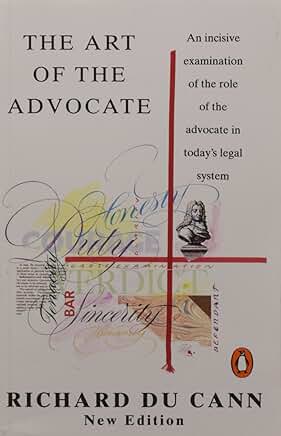
The Art of the Advocate by Richard Du Cann
Summary
The Art of the Advocate by Richard Du Cann is a classic exploration of the craft of courtroom advocacy. Combining history, anecdotes, and practical advice, Du Cann outlines what makes an advocate effective and persuasive. He stresses the importance of preparation, clarity, integrity, and courtesy, while warning against common pitfalls such as prolixity, sarcasm, and overconfidence.
Key Insights
- Until 1836, legal representation in serious criminal cases was not permitted.
- Dickens and Trollope mocked the legal profession through character names like “Slow” and “Bideawhile.”
- The law often operates to sustain itself—“making work for itself,” as Dickens observed.
- Historical anecdotes: John Bellingham shot the PM in 1812 and was executed within the same week; the Greeks banned paid advocates.
- Effective advocacy requires gravity and seriousness; levity undermines credibility.
- Truth is laboriously won; error is quick and careless. A sound argument must rest on well-established facts.
- Barristers must notify their opponents of the authorities they will cite.
- The opening speech must be clear and concise—audiences only know what they are told.
- Advocates must thoroughly master their brief, memorising key facts.
- Questions during cross-examination must be short, sharp, and designed to weaken the opponent’s case or support one’s own.
- Sarcasm, mockery, and tricks diminish an advocate’s standing and efficacy.
- There must be no surprises in court—ambushes are unethical.
- The best advocate is powerless against an honest and accurate witness.
- Historical context: San Thome island’s use of slave labour in 1907; Cadbury sued for libel and awarded one farthing.
- Long-winded witnesses appear dishonest; answers should be Yes or No.
- Key terms: “resile” (abandon position), “assiduity” (persistent attention).
- Businesslike professionalism is key; avoid jokes or claims you cannot justify.
- Persuasion begins with pleasing—win the court before you win the argument.
Strengths
- Combines rich historical detail with practical courtroom guidance.
- Emphasises ethics and truth-seeking over showmanship.
- Clear rules and memorable advice for aspiring advocates.
- Written with authority and insight from a seasoned legal professional.
Weaknesses
- Occasionally dated in tone or references (e.g., C19th affectations).
- Presumes a degree of legal knowledge that may challenge lay readers.
Reflections
This book is a gem for anyone interested in law, rhetoric, or the ethical practice of persuasion. Du Cann writes with clarity and conviction, blending the cerebral with the practical. His core message, that the advocate’s duty is not merely to win, but to serve justice, rings especially true in an age of performative argumentation.
Conclusion
A must-read for law students, barristers, and anyone who values reasoned argument and ethical persuasion. The Art of the Advocate remains a powerful reminder that thorough preparation and decency are the true tools of the courtroom.
Book Details
Title: The Art of the Advocate
Author: Richard Du Cann
Publication Year: 1993
Genre: Political Science
Reference: Calandra Vol. 4 p. 24