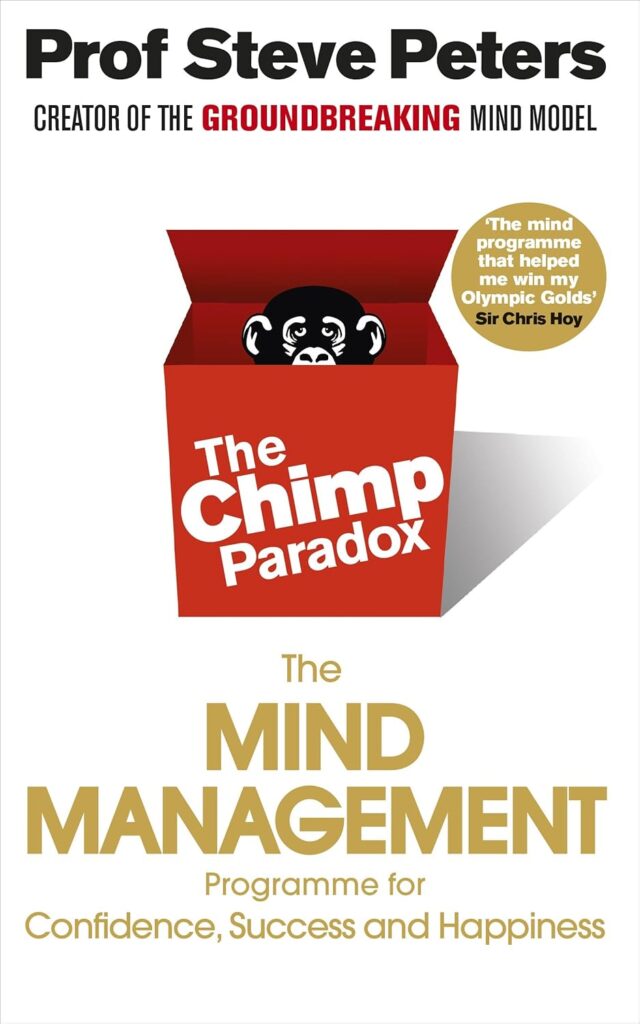
The Chimp Paradox by Steve Peters
Summary
Peters presents a model of the mind in which an “inner chimp” represents the emotional, impulsive part of ourselves. The chimp is not inherently evil; instead, it is driven by survival instincts that need to be managed. Peters outlines how to recognise when the chimp is in control, how to take responsibility for its actions, and how to meet its needs for security, esteem, and appreciation.
The key is to accept responsibility, manage emotional impulses, and make conscious, rational decisions rather than letting the chimp dictate behaviour.
Key Insights
The “chimp” is the emotional brain — reactive, paranoid, judgemental, and prone to catastrophising.
You are responsible for your chimp’s actions, just as you are responsible for your dog if it bites someone.
Recognising whether it is you or your chimp reacting is crucial.
You can choose whether to accept or reject the emotions your chimp offers.
Meeting the chimp’s needs can prevent destructive behaviour.
Forgiving yourself for chimp outbursts is essential — guilt and shame are unhelpful.
Strengths
Memorable metaphor that makes complex psychological concepts accessible.
Practical, actionable strategies for emotional management.
Encourages personal responsibility and self-awareness.
Weaknesses
The chimp metaphor, while engaging, can feel overextended at times.
May oversimplify more complex psychological conditions.
Reflections
Peters’s emphasis on recognising and taking responsibility for emotional impulses is valuable across personal and professional life. His framework offers a simple but effective way to defuse emotionally charged situations.
A colleague once noticed me reading this and similar books and asked if they made any difference. Did I learn anything, and did anything change for the better? Fair questions. The honest answer: not as much as I’d hope. I’ll try an idea for a week or two, then forget. But every so often, something does sink in. Maybe that makes the effort worth it.
Conclusion
You can’t get rid of your chimp; you can only learn to manage it. The task is to recognise it, accept it, and guide it rather than letting it run the show. Because when the Chimp dictates your actions, the results are rarely a recipe for social success. Trust me on that one.
Book Details
Title: The Chimp Paradox: The Acclaimed Mind Management Programme to Help You Achieve Success, Confidence and Happiness
Author: Steve Peters
Publication Year: 2012
Genre: Self-help
Reference: Calandra Vol. 2, p. 32
← Previous: Understanding Women by Romy Miller