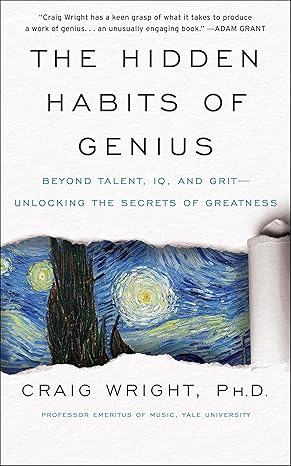
The Hidden Habits of Genius by Craig Wright
Summary
In The Hidden Habits of Genius, Yale professor Craig Wright explores what distinguishes genius from talent. It is not so much IQ scores and the 10,000-hour rule that make a genius; instead, Wright argues, it is traits such as curiosity, resilience, risk tolerance, and playfulness.
He draws on a range of historical figures, from Leonardo da Vinci to Harriet Tubman, to illustrate how genius manifests across disciplines. Wright doesn’t deny the role that luck and social context play, but focuses instead on the habits and mindsets that give rise to extraordinary achievement.
Key Insights
- Genius is more than talent – Prodigies imitate; geniuses create.
- Curiosity and discovery – We learn best when we uncover truths for ourselves.
- Nature, nurture, and epigenetics – Genes provide potential, but environment and experience shape its expression.
- Risk tolerance and resilience – Great achievers are willing to take calculated risks and recover from setbacks.
- Neoteny – The capacity to retain childlike curiosity and playfulness into adulthood.
- Genius across history – Case studies span politics (Elizabeth I), science (Newton, Mendeleev), art (Eliot, Gentileschi), and invention (Edison, Franklin).
- Flawed greatness – Geniuses can be blinkered, make poor decisions (“cognitive entrenchment”), or fall prey to sunk-cost thinking.
- Preparation meets opportunity – Luck favours those who are ready to capitalise on it.
- Routine and physical movement – Dickens walked 15 miles a day; regular habits sustain long-term creative output.
- The myth of the lone genius – Collaboration and networks often underpin breakthroughs.
Strengths
Wide-ranging examples – Draws from a diverse array of historical and cultural figures.
Accessible style – Blends biography, science, and cultural history in a readable narrative.
Balanced view – Highlights both strengths and weaknesses of geniuses.
Weaknesses
Unproven claims – The discussion of female genius acknowledges bias but doesn’t convincingly prove parity in numbers.
Loose definition of genius – The concept can feel stretched to fit very different personalities and achievements.
Anecdotal evidence – Heavy reliance on historical stories over systematic analysis.
Reflections
While the book is competently written and peppered with engaging anecdotes, it covers familiar territory without offering fresh insight. The “genius” theme is popular with publishers, so it is hard for a new book to stand out unless it offers something we’ve not heard many times before. This one seems shaped more to meet a market demand than to satisfy an intellectual need. That doesn’t make it valueless; publishers are in business, and “genius” sells as readily as beauty treatments. But the result feels more manufactured than inspired.
Conclusion
The Hidden Habits of Genius is an easy and often enjoyable read, but it adds little to what has already been written about the subject. Readers new to the “habits of greatness” genre may find it stimulating, but those familiar with similar works will likely recognise much of the material. Ultimately, it feels like a commercially driven entry in a crowded field rather than a groundbreaking contribution.
Book Details
Title: The Hidden Habits of Genius: Beyond Talent, IQ, and Grit―Unlocking the Secrets of Greatness
Author: Craig Wright
Publication Year: 2021
Genre: Decision making
Reference: APA-04, 29
← Previous: Make It Stick By Peter Brown