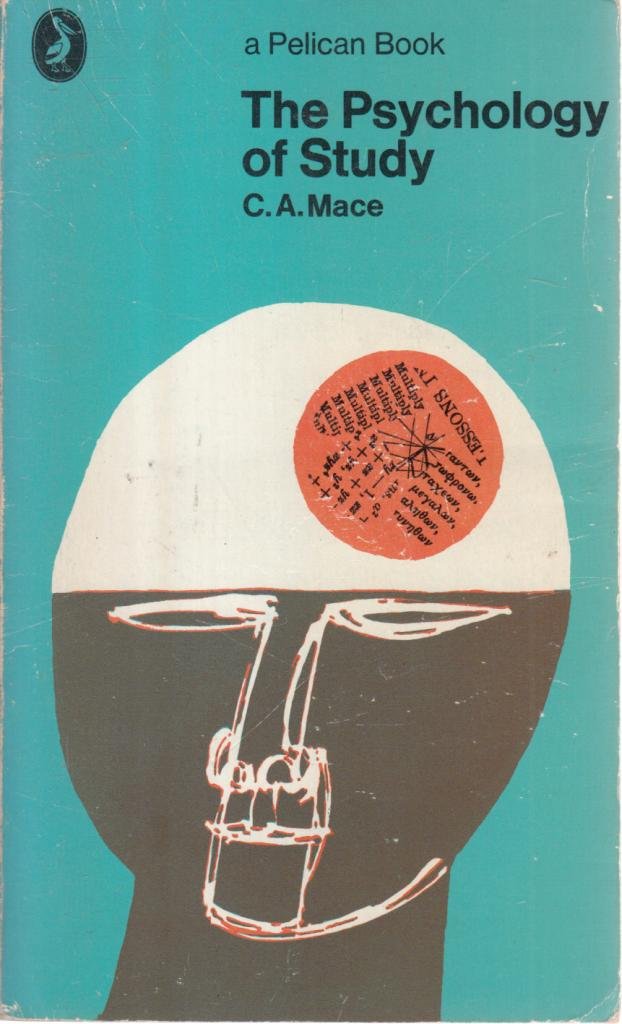
The Psychology of Study by C. A. Mace
Summary
First published in 1932, C. A. Mace’s The Psychology of Study is a practical and surprisingly modern exploration of how people learn most effectively. Far from endorsing rote memorisation or passive repetition, Mace stresses purposeful curiosity, clear goals, and active engagement with material. His insights bridge psychology and practical advice, offering timeless strategies for students and lifelong learners alike.
Key Insights
Curiosity and Purpose
- Curiosity is the appetite of the mind: learning sticks when driven by genuine interest.
- Knowledge is best retained when it is an answer to a question. Looking for something yields far more than simply looking at something.
- Intellectual success is often tied to a broad range of curiosity.
Active vs Passive Learning
- Passive repetition is largely ineffective; active repetition—retrieving, reusing, and relating information—strengthens memory.
- We retain information by using it, whether in writing, teaching, or applying it.
- “Think on paper”: writing explanations and summarising helps organise and deepen understanding.
Goals and Motivation
- Failure often arises from vague intentions. Instead of “I must study X”, commit to “I will study X on Tuesday from 2–4pm”.
- Goals should be specific in content, time, and duration.
- Emotional bursts of desire are fleeting; what matters is a steady, cool purpose over time.
- William James’ advice—“Every day do something I don’t want to do”—builds discipline and resilience.
Techniques of Learning
Mace identifies three main methods:
- Repetition – but only active, not passive.
- Mnemonics – useful, but limited.
- Integration – the deepest form, linking new information with existing knowledge.
Time and Efficiency
- Morning work is most efficient; early hours offer clarity and focus.
- Worry often arises from unfinished tasks; the antidote is immediate action.
- Thoughts return to incomplete processes (what we’d now call the Zeigarnik effect).
Communication and Application
- Always identify the audience: Who am I writing for? What do they need? What is my purpose?
- Be “bilingual” in communication—able to explain ideas both to experts and to laypeople (or investors).
- Seek feedback to refine clarity and effectiveness.
Strengths
Timeless wisdom: despite its age, the book anticipates many findings of modern cognitive science (e.g., active recall, spaced repetition, goal-setting).
Practical: Mace translates psychology into concrete study habits and routines.
Balanced: he stresses both intellectual curiosity and disciplined structure.
Weaknesses
Some of Mace’s terminology feels dated.
Certain recommendations (e.g., morning-only work) may not suit everyone’s rhythms.
Less emphasis on collaborative learning compared to individual study.
Reflections
Mace’s advice resonates with what we now know about retrieval practice, deliberate scheduling, and habit formation. I found his insistence on precise, time-bound goals particularly valuable—replacing vague intentions with concrete commitments. His framing of curiosity as the “appetite of the mind” also reframes study not as drudgery, but as the pursuit of questions worth answering.
Conclusion
The Psychology of Study is a quietly profound book that strips learning back to its essentials: curiosity, clarity of purpose, active engagement, and disciplined persistence. Mace’s insights remain fresh nearly a century later, making this slim volume a hidden classic for anyone serious about mastering the art of learning.
Book Details
Title: The Psychology of Study
Author: C. A. Mace
Publication Year: 1973
Genre: Study
Reference: Calandra 6
← Previous: The Myths of Creativity by David Burkus