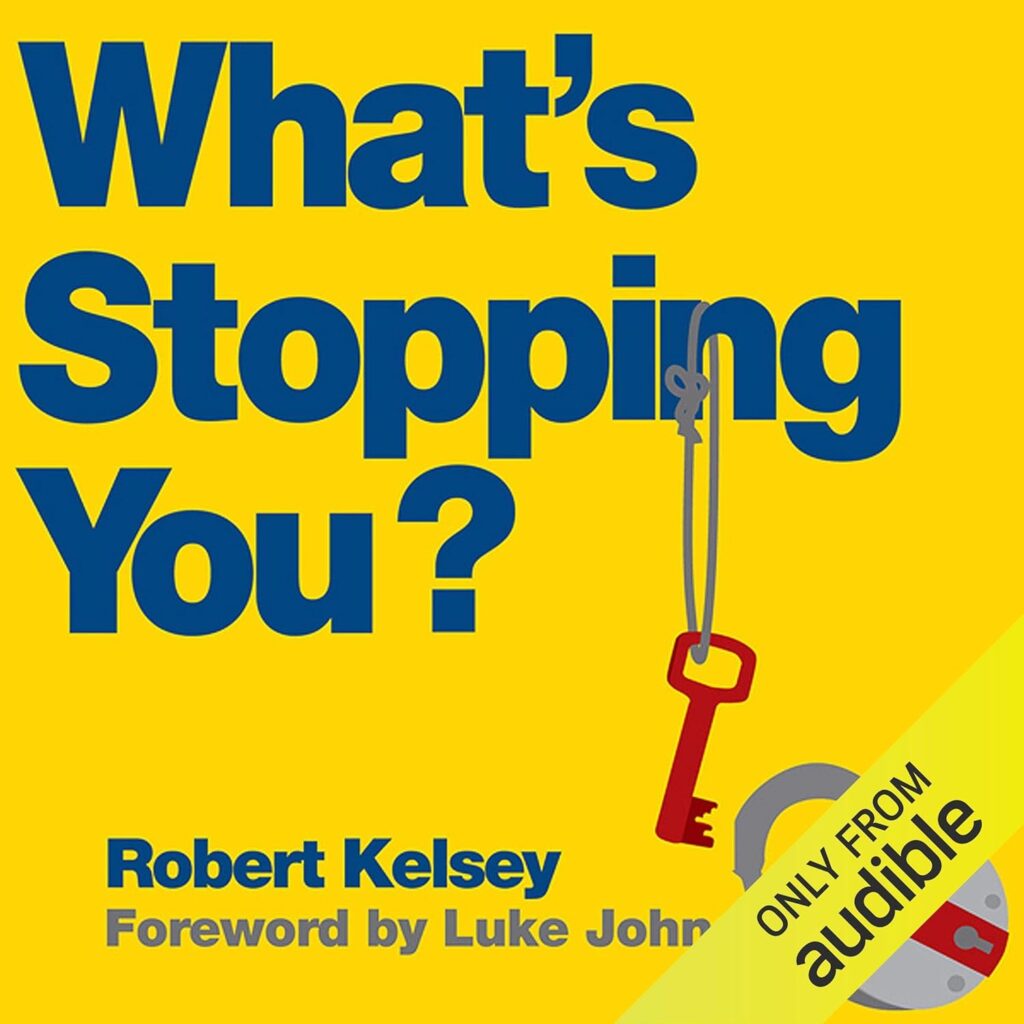
What’s Stopping Me by Robert Kelsey
Summary
Robert Kelsey examines why capable individuals often fall short of their potential, focusing on fear of failure (FF) as the central obstacle. Drawing from personal experience, psychology, and practical strategy, he contrasts FF with achievement motivation (AM) and offers concrete steps for overcoming self-limiting beliefs. The book moves from identifying inner barriers to constructing actionable plans for personal and professional growth.
Key Insights
Fear of Failure vs. Achievement Motivation:
- FF mindset: success = luck, failure = lack of ability.
- AM mindset: success = ability, failure = lack of effort or skill.
Origins of Fear: Early humiliation, ridicule, and public embarrassment shape lifelong patterns.
AM Skills: Self-motivation, self-starting, people skills, emotional control, enthusiasm, commitment.
Managing Emotions: Anger is “fear’s ugly sister.” Revenge fantasies and critical thoughts increase anxiety.
Personal Responsibility: Own all thoughts and actions; FF does not automatically mean low self-esteem.
Vision & Planning: Create a 10-year detailed plan; define constitution (values, beliefs, attitudes, expectations, actions).
Goal-Setting: Goals must be specific, measurable, and realistic — e.g., Everest example: include “and get back safely.”
Strategy & Tactics: Avoid reliance on willpower; instead develop a winning strategy.
SWOT Analysis: Know your strengths, weaknesses, opportunities, and threats to guide decisions.
Creativity & Limits: New ideas are recombinations; setting constraints can spark solutions.
Time Value: Treat time as a precious resource; waste has high opportunity cost.
Self-Respect: Self-liking and self-respect underpin healthy relationships with others.
Criticism: Expect it; most fools criticise, complain, or condemn.
Leadership: Always lead by example, whether intentional or not.
Financial Discipline: Apply strict cost control; avoid blind optimism and overconfidence.
Strengths
Combines introspection with practical business tools like SWOT analysis.
Rich in memorable analogies and personal anecdotes.
Balances psychological insight with actionable strategies.
Weaknesses
Some advice assumes a certain level of existing confidence or professional experience.
The FF/AM framework may oversimplify complex motivations.
Reflections
Kelsey’s blend of personal vulnerability and structured methodology makes his advice relatable and actionable. The emphasis on defining objectives, valuing time, and leading by example resonates beyond business into personal life.
Conclusion
A thoughtful, practical guide for those held back by fear of failure. By shifting from avoidance to achievement mindsets and applying clear strategies, readers can better align their abilities with their potential.
Book Details
Title: What’s Stopping You? Why Smart People Don’t Always Reach Their Potential
Author: Robert Kelsey
Publication Year: 2012
Genre: Business Life
Reference: Skylark Vol. 3 p.19
← Previous: Willpower by Roy Baumeister
Next → Persuasion by James Borg